
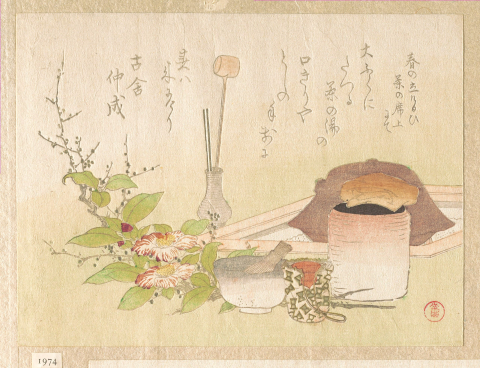
Tea Ceremony Wikimedia Public Domain
Black or green, tea is the most consumed beverage on the earth, second only to water, and is one of the oldest drinks known to humankind. The rich green color of the evergreen plant attracted Chinese healers who referred to the drink as the ‘froth of liquid jade.” Tea is closely associated with Eastern religions; their monks finding it useful for meditation and is appreciated worldwide as a social lubricant and source of ritual. All tea comes from the same plant, Camellia sinensis, but is processed differently to give us the variety of teas we are familiar with. Only the top bud and two terminal leaves are picked; these are called the flush. The variety and flavor of teas we can find on the market vary depending on geographic conditions like soil, altitude, climate or what we call terroir but also on the history, tradition, and culture of the people that produce them.
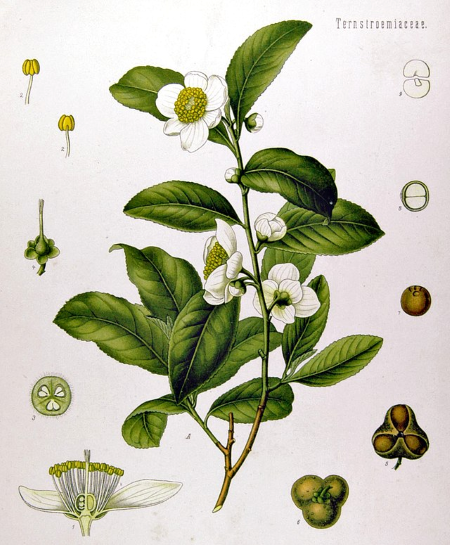
Camellia sinensis Wikimedia Public Domain
The tea plant, Camellia sinensis, likely originated in the hilly regions around southern China and northeastern India including Laos, Burma, and Vietnam, but the origin of it as a cultivated crop is fairly certain to be in China over 2000 years ago. The jungles of Southern Yunnan in China are home to the oldest tea trees in the world; some may be over a thousand years old and are venerated and tea is processed using ancient traditional methods by local villages. Some believe in what they call the tea ancestor and will worship the most exuberant tea tree in their area as a “tree of tea spirit.” The village of Xiangzhujing is home to the oldest cultivated tea tree, the Splendid Tea Father, that is over 30 feet tall and estimated to be 3200 years old.
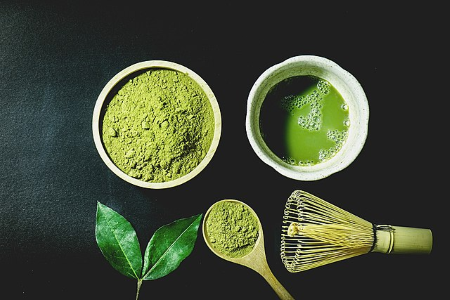
Matcha Green Tea Wikimedia Public Domain
All tea comes from this plant but there are three varietals – China bush, Assam bush, and Java bush. They all have glossy green leaves and pretty camellia-type flowers with white petals. China is known for its fresh and sweet green tea, India for its black tea that is aromatic and flavorful, while Japanese green tea has more of an umami/vegetal aspect. Processing and terroir help determine the flavor of those teas. Chinese green tea is pan-fried before drying while Japanese is often processed by steaming or drying and powdering the leaves to make matcha type. White tea comes from new leaves of the plant and result from the practice of shading the plants on the bush for the last three weeks before processing, limiting the production of chlorophyll. India is known for its black teas, including Darjeeling, the Queen of Indian Teas. Black teas are withered or sun-dried and oxidized to obtain the dark color and aromatic flavor while Pu-erh is fermented—the only one in which the leaves are processed in that manner. The leaves are packed together, initially dried but kept tacky, allowing yeast and bacteria to do their work and create the unique flavor profile of the tea. Further processing or additives create various types of Pu-erh. Fermentation is responsible for an old but newly popular beverage, kombucha, in which liquid tea undergoes a fermentation reaction to create the sparkly, acidic drink abundant on today’s grocery shelves. Specific communities of bacteria and yeast produce the drink and are referred to as SCOBY: Symbiotic Culture of Bacteria and Yeast.
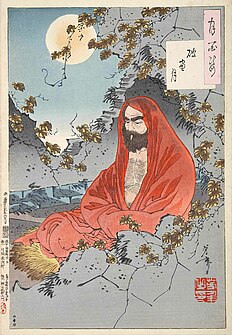
Bodhidharma via Wikimedia commons
Bodhidharma, Brahman prince was seeking enlightenment through meditation as a follower of the Buddhist doctrine of sudden enlightenment. He traveled to China and spent nine years meditating and, in his words, ‘listening to the ants scream’ in a cave near the Shaolin Temple near Loyang in Henan Province. One day during a seven-year meditation he fell asleep and woke up furious with himself. He cut off his eyelids so he would never close his eyes again and threw them on the ground. Where the eyelids touched the ground grew a tea bush. Since then, meditating monks have relied on the sacred beverage during long hours of meditation and Bodhidharma is always shown with intense lidless eyes.
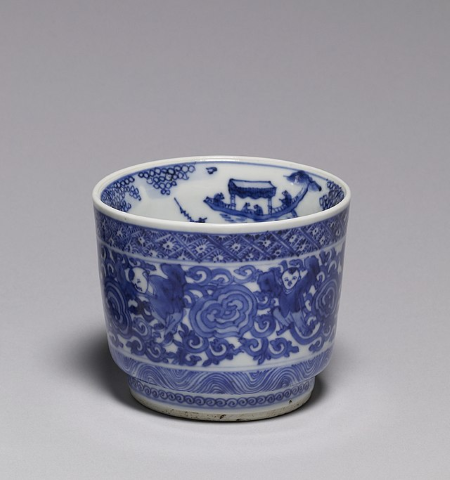
Blue ceramic teacup Wikimedia Public Domain
From its origin in China, tea was always associated with hospitality–as it gained in popularity it inspired new ceramic designs and frothing tools for the enjoyment of imbibers. Accessories evolved from simple blue bowls to lidded cups and teapots: the pretty blue color complimented the bright green tea. However, the cups did not have handles, that was up to the Europeans who liked their tea quite hot and preferred cups with handles. Japan, famous for its tea ceremony, often grows its tea in tidy rows near a stream for a morning blanket of dew. In the Assam region of India, locals traditionally prepared tea as a vegetable or a fermented drink. Although originally deemed as inferior to Chinese tea, Assam tea has become a popular drink.
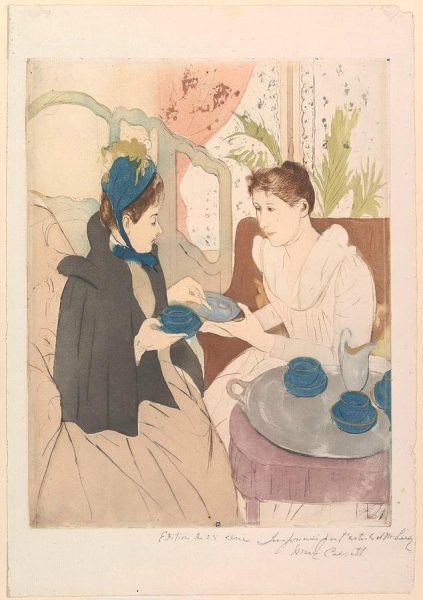
American Artist Mary Cassatt illustration common use
Europeans were also the ones that began using sugar with their tea. By the 17th century, tea had made it through Europe and to the Americas. From its first import in 1706 to the establishment of afternoon ‘tea’ as basically a meal, to the British East India Company, tea was a foundation of world trade, slavery on sugar plantations, opium, bootlegging, society, and revolution.
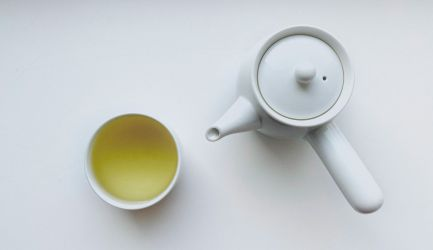
white tea Unsplash
While many drink tea for the benefit of caffeine, it is also strongly associated with custom, hospitality, and our social connections—all of which are good for our health. Tea may contain as many as 600 volatile compounds depending on how they are processed. Many of these contribute to the aroma and taste and may be floral, fruity, nutty, or with earth notes. To further enhance the flavor, Earl Grey tea has bergamot and sometimes lavender; floral teas, often white tea, add ingredients like osmanthus or jasmine. But it is the ingredient called polyphenols or flavonoids, especially in green tea, that can help with heart and blood health and inflammation. Many of these benefits are still being studied but it seems that sipping a cup of tea is certainly a good way to have a bit of quiet time either alone or with a friend.
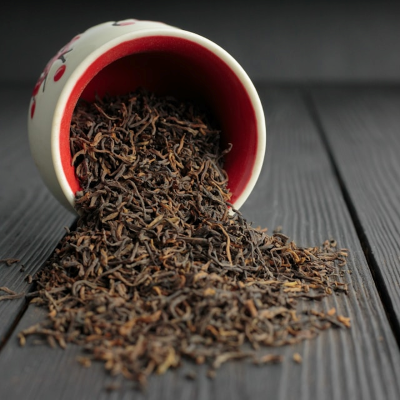
Photo by petr sidorov on Unsplash
Magickly speaking, black teas may be used to banish dampness in Traditional Chinese Medicine but also provide courage and possibly regulate the flow of money, possibly because the caffeine helps you be more alert. Green tea can be an aphrodisiac and help banish negativity while also being useful in love and passion spells. Both black and green tea are masculine in energy and fiery in nature, but black tea may be more of a winter drink while refreshing green tea is great for summer.

Rochas Globe ad via Alamy
In perfumery, Clayton Ilolahia, Evaluation and Communications Manager and Michael Edwards of Fragrances of The World, tell us that “Jean Claude Ellena can be credited for the note becoming popular. Rochas Globe (1990) was the first time it appeared in one of his fragrances (an aromatic Fougere with a maté tea note). Ellena’s Bulgari au Parfumee au The Vert t came two years later. Bulgari continued to explore tea notes even when working with other perfumers (Bulgari Pour Femme 1994 has a jasmine tea note – IFF – Lorson and Grojsman) and then Bulgari Pour Homme (1995 had a Darjeeling tea note – Firmenich Cavallier-Belletrud). The other tea icon is CK One (1994- Firmenich Fremont and Morillas) with its green tea accord in niche is Thé Pour Un Eté – 1996, green tea, Olivia Giacobetti.”
Part of my ritual is to find my favorite cup—in particular an artisan-made smooth handle-less one I found on vacation—portion out the loose leaves and let it steep a few minutes and then I add a bit of local honey. Green tea for a working companion and black chai tea for a special treat. What’s in your cup of tea?
Guest Contributor: Elise Vernon Pearlstine, Author of Scent: A Natural History of Fragrance

Courtesy of the Brand
Thanks to the generosity of Tempus Vitae® Parfum composed by Hez Binkowitz, we have a 50 ml bottle of Hight Tea for one registered reader in the U.S or 15 ml worldwide. You must register here.
Notes: Calabrian Bergamot, Bitter Orange, Gingerbread, Black Tea, Honey, Milk, Linden Blossom, Violet, Clove, Green Cognac, Tobacco, Sandalwood, Cedar, Leather, Vetiver, Labdanum, Benzoin, Bois D’Encens, Cashmeran, Ambergris, Iso E Super, Ambroxan, White Musk.
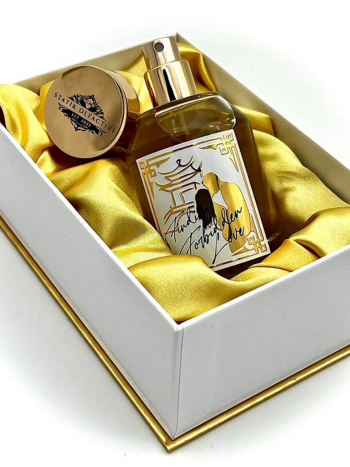
Thanks to the generosity of Statik Olfactive, we have one 50ml bottle of Finding Forbidden Love by Paul Kiler for a registered ÇaFleureBon reader for a USA and EU reader (if you are not sure if you are registered, click here – you must register on our site or your entry will be invalid).
Top Notes: White Peaches, White Tea, Jasmine, Rose, Cypress Wood; Middle Notes: Frankincense, Opoponax, Labdanum; Base Notes: Raspberry, Davana, Honey, Sandalwood
To be eligible, please leave a quality comment about what you learned about Tea in Perfumery, which you would like to win and where you live. There are two winners. Draw closes 2/15/2026
Follow us on Instagram:@cafleurebonofficial@statikolfactive@tempusvitaeparfums@hezparfums @elisepearlstine
This is our Privacy Policy
We announce the winners only on our site and on our Facebook page, so like CaFleureBon and use our blog feed… or your dream prize will be spilled perfume