
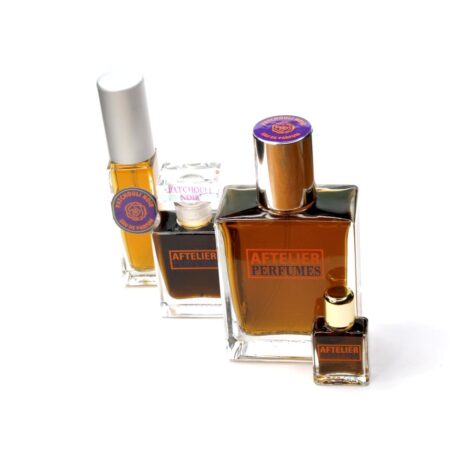
Aftelier Perfumes Patchouli Noir Liquid perfumes©
Award-winning artisanal natural perfumer Mandy Aftel of Aftelier Perfumes has just graced us with a most extraordinary new fragrance: Aftelier Perfumes Patchouli Noir. As my review unfolds, I hope to illuminate why this perfume is exceptional, unique – and how it transcends some popular expectations one might harbor about patchouli.

Mandy Aftel of Aftelier Perfumes©
Polarizing fragrant materials certainly exist, and they often determine whether or not an individual favors specific scents. At the top of the list we are likely to find patchouli (oud, musk, galbanum, and other myriad notes find themselves there, too). It’s a love/hate, approach/avoidance issue which can be mitigated by the particular fashion and variation of fragrant form a perfumer chooses to employ. These days our existing olfactory palette offers a wide swath of possibilities, from the darkest to the lightest of patchouli versions: some are velvety and enchanting as Homer’s wine-dark sea (my favorite way of describing the winey, chocolatey, aged sort); others are characterized as ‘clean’ – more delicate, airy, fey in nature. Those of us (yours truly amongst them) are very familiar with the sharper, more acrid green head-shoppy aroma so popular in the 1960s and 70s – and this iteration is either adored or detested, with no measure of indifference. Considering these factors, it’s remarkable that Mandy Aftel has succeeded in composing a patchouli perfume which will entrance even those who would normally eschew the substance: no mean feat.
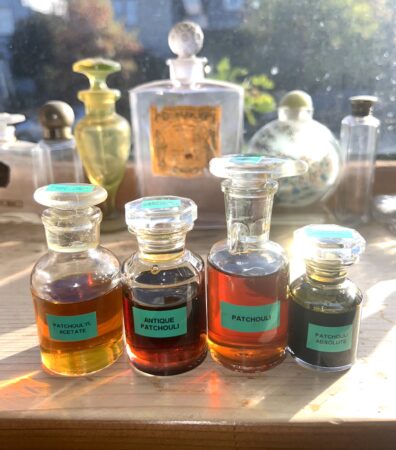
Four Patchouli essences©
What do we know about patchouli? Were you aware that it is actually a member of the mint family (I recall being gob smacked when I initially became aware of this fact.)? Patchouli, aka Pogostemon cablin, is a leafy perennial herb which flourishes in tropical climates, providing that it doesn’t receive too much direct sunlight. The name is derived from the Tamil word patchai or paccuḷi, which means green, and ellai – leaf. Patchouli grows happily in Southeast Asia, North East India, and Nepal – and nowadays is also cultivated in Asia, South America, Madagascar, and the Caribbean. Currently, the global yearly demand for patchouli oil is over 1,600 metric tons, and greater than 90% of this is produced by Indonesia alone.
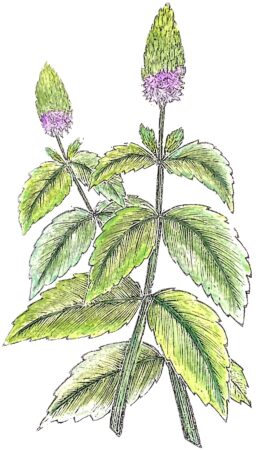
Mandy Aftel’s hand colored illustration of Patchouli©
Patchouli’s uses range from insecticide and fungicide (apparently Formosan termites detest it); a traditional Chinese herbal panacea for colds, nausea, diarrhea, headache and fever; teas, incense, and perfumes. It became familiar to Westerners during the 19th century when established trade routes with India introduced precious textiles (such as cashmere shawls and silk brocade) which were scented and layered with patchouli leaves to prevent the ravages of insects during travel. The Victorians were quite smitten by this exotic fragrance, and patchouli incrementally gained in popularity. Amongst those who adored patchouli were the Empress Eugénie de Montijo, Napoléon III’s wife. Mme. De Feydeau cites its immense popularity amongst the demimondaines (women in the 19th century who lived on the fringe of respectable society, specifically courtesans who were supported by wealthy lovers) in her recent perfumed history of legendary women, Les Voluptueuses.
Mandy Aftel shared her search for quality patchouli oil with us. It seems that when she ran out last year, she contacted her usual source – but unfortunately, they couldn’t provide the same high quality. In her intense quest, she found herself obsessed with the beautiful material and knew that she had to create a patchouli perfume. Mandy was eventually able to source both an exquisite patchouli oil and a rounded absolute as well which echoed a very aged essence she had purchased years ago.
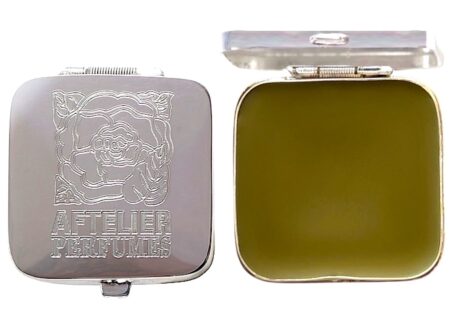
Aftelier Perfumes Patchouli Noir solid perfume©
Aftelier Perfumes Patchouli Noir can only be described as extraordinary; it is more than the sum of its aromatic components. Mandy was kind to send me small samples of each of its forms – parfum, eau de parfum, and the solid perfume: each possesses its own charm. The softest of the three is the solid, which has a velvety beeswax base; it’s satisfyingly subtle. Both the parfum and the edp announce their presence a bit more audaciously and are more expansive, which is to be expected. Patchouli Noir opens with the smoldering appearance of pine tar commingled with sprightly tones of pink pepper and blood orange; it’s unexpected and intriguing, and unlike any other existing patchouli fragrance. Potent as it is, the introduction avoids Olfactory Icepick territory and feels deeply mysterious and compelling. A whispered undercurrent of floralcy is provided by rosy damascenone (a rose ketone) and a hush of ylang-ylang concrete; they blend seamlessly. I know that there is tomato leaf, but I’m unable to parse it out because its presence refuses to be declamatory – it’s companionable with Mandy’s other constituents. Patchouli, in its many iterations – is the star of Patchouli Noir, and it’s the variety I most love – deep as the darkest chocolate and full-bodied as a rounded red wine. Mandy has chosen to embellish it with musky nuances: the herbal/intensely musky/woody/almost minty/boozy green element of spikenard (also known as green muskroot) and both true ambergris and the vegetal ambrettolide. Cognac may be subtle, but you can detect her fruity liquorish charisma; nutmeg is a spicy accent. Coumarin, a natural isolate derived from tonka beans, confers its sweet, powdery, haylike notes which furnish a sense of wholeness; and Virginia red cedar (blood cedarwood) helps prolong Patchouli Noir’s longevity with its balsamic depth redolent of the forest.
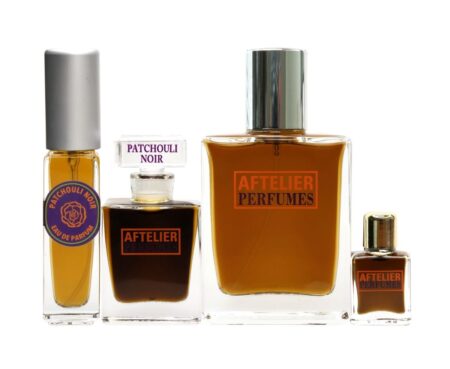
Aftelier Perfumes Patchouli Noir Liquid perfumes©
I find Patchouli Noir to have a remarkably calming effect, as if a measure of serenity descends when it is applied to the skin. As it dries down, you can appreciate its symphonic complexity: tenderly musky, earthy, serene. A touch of the roaring fireplace about it, but not in excess. It makes one rethink everything they thought they knew about this famous member of the mint family…
Notes: blood cedarwood, blood orange, pink pepper, damascenone, tomato leaf, ylang ylang concrete, spikenard, nutmeg absolute, patchouli absolute, antique patchouli, patchouli EO, patchoulyl acetate, pine tar, ambergris, ambrettolide, cognac, coumarin.
Patchouli Noir eau de parfum and parfum are only available until Valentine’s Day, but the solid will continue to be available.
Samples generously provided by the perfumer – many thanks! My nose is my own…
~ Ida Meister, Deputy and Natural Perfumery Editor
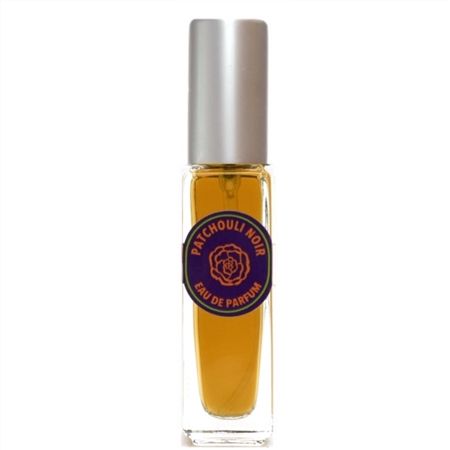
Aftelier Perfumes Mini Flacon
Thanks to the generosity of perfumer Mandy Aftel, we have one mini bottle of Aftelier Perfumes Patchouli Noir for one registered reader worldwide (with the exception of Italy due to mailing restrictions). The giveaway is for registered readers only, so be sure to register if you have not done so. To be eligible please let us know what appealed to you in Ida’s review, where you live and your favorite Aftelier Perfumes fragrance. Draw closes 11/15/2025
Mandy Aftel received a ÇaFleureBon Best of Scent in the Hall of Fame category from Michelyn in 2021, 2023 Best Natural Perfumer and Best Book, as did Ida for The Museum of Scents – Exploring the Curious & Wondrous World Of Fragrances. Ida awarded Aftelier Perfumes Perfumes Joie de Vert a ÇaFleureBon Top 10 perfume of 2021. Cepes and Tuberose is a ÇaFleureBon Modern Masterpiece. Please read Ermano’s article here.
Please read Michelyn’s interview with Mandy Aftel here
Follow us on Instagram @cafleurebonofficial @idameister @AftelierPerfumes
This is our Privacy Policy
We announce the winners only on site and on our Facebook page, so Like ÇaFleureBon and use our Blog feed…or your dream prize will be just spilled perfume.